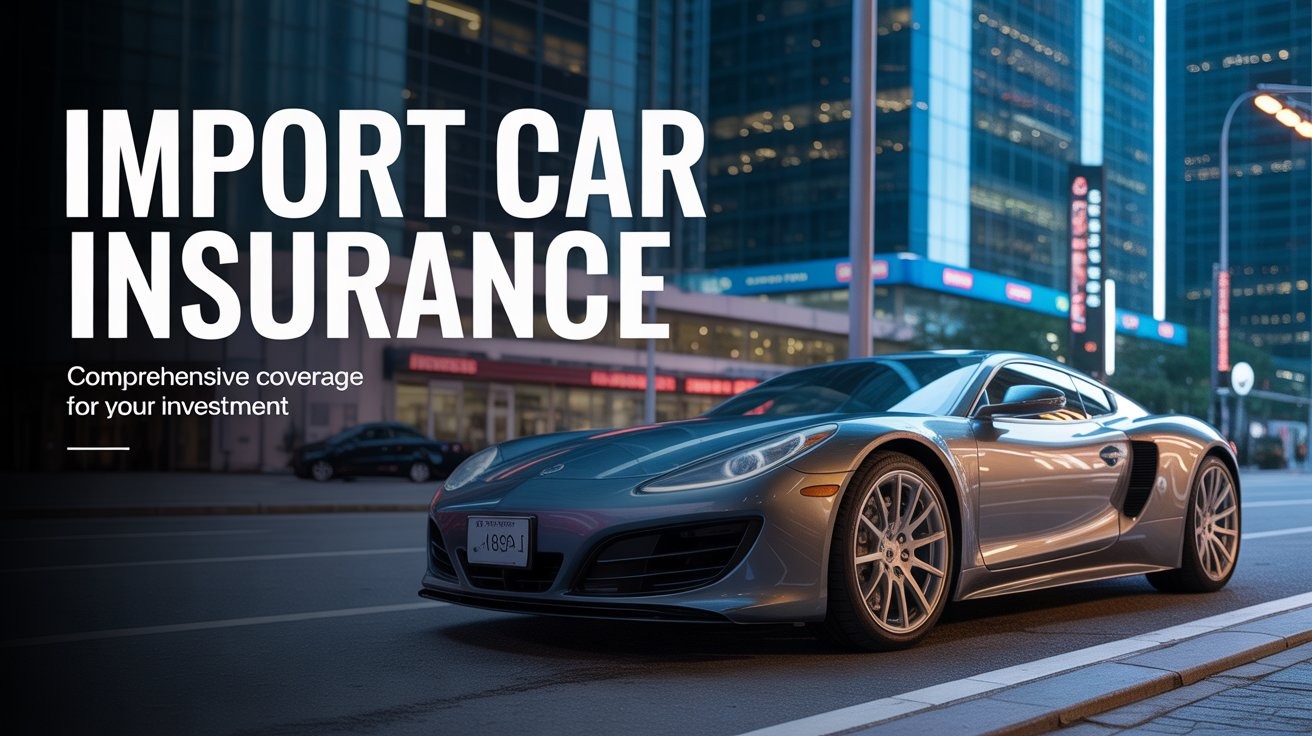
So, you just found your dream car overseas, maybe a sleek Japanese sports coupe or a rare European classic and now you’re wondering… how do I insure it once it lands here
Honestly, this is one of the biggest headaches people face after importing a vehicle. Regular car insurance doesn’t always cover imported models, and getting the right protection can feel like solving a puzzle.
Let’s break it all down in plain English.
What Is Import Car Insurance
Import car insurance is coverage designed specifically for vehicles that are brought from another country into the U.S. (or your home country).
These cars often have different safety standards, parts, and VIN formats, which can make them harder and more expensive to insure under standard policies.
Simply put:
If your car wasn’t originally made for the U.S. market, you’ll likely need import car insurance instead of regular auto coverage.
Two Types of Imported Cars
Before getting coverage, it’s important to know what kind of import your car is:
1. Grey Market Cars
These are vehicles that were not made for U.S. standards but were imported individually by owners or dealers.
Think of JDM cars (like Nissan Skyline, Toyota Chaser, or Mitsubishi Evo) or European models that aren’t officially sold here.
These usually need special insurance because their parts and repair costs differ from U.S. versions.
2. Direct Manufacturer Imports
These are cars imported by official dealers, for example, a BMW or Toyota model that’s also sold locally.
These are much easier and cheaper to insure.
Knowing which type your car falls under helps determine what insurance companies will cover it and how much you’ll pay.
What Does Import Car Insurance Cover
Coverage depends on your insurer, but here’s what a typical import car policy may include:
| Coverage Type | What It Protects |
| Liability Insurance | Covers injuries or damages you cause to others. (Required by law in most states.) |
| Comprehensive | Protects against theft, vandalism, fire, or natural disasters. |
| Collision | Covers your car’s repair costs after an accident regardless of fault. |
| Agreed Value Coverage | For rare or collectible imports, you and the insurer agree on the car’s total value. |
| Spare Parts Coverage | Helps cover the cost of replacing rare or imported components. |
| Overseas Shipping Insurance | Protects the car while it’s being shipped from another country. |
Always ask your insurer if they offer agreed value or specialty auto coverage. That way, your import’s true worth is protected.
How Much Does Import Car Insurance Cost
It depends on a few key factors:
- Car’s value and age
- Country of origin (Japanese, German, British cars have different part costs)
- Availability of replacement parts
- Driving history and location
- Whether it’s left-hand or right-hand drive
On average, import car insurance costs 20–40% more than a similar domestic vehicle’s policy mainly due to the cost of repairs and limited parts availability.
But here’s a trick:
Some specialty insurers offer lower rates if your imported car isn’t a daily driver for example, if you only use it for shows or weekends.
How to Get Import Car Insurance
Here’s how to make the process smooth and stress-free:
- Gather car details — VIN, country of origin, import paperwork, and vehicle modifications.
- Check compliance — Make sure your car meets U.S. safety and emissions standards (or has been converted).
- Contact specialty insurers — Look for companies that handle classic, exotic, or imported vehicles.
- Get multiple quotes — Rates can vary a lot between insurers.
- Ask about spare parts coverage — This one’s important for older or rare models.
- Submit proof of ownership and registration.
Once approved, you’ll get your policy documents and ID cards and your import is officially insured.
Common Mistakes to Avoid
Many import owners end up overpaying or underinsuring because they miss small details. Don’t make these mistakes:
- Not declaring modifications (insurers can deny claims later).
- Choosing the cheapest coverage without checking exclusions.
- Forgetting shipping insurance while the car’s in transit.
- Skipping agreed value coverage for collector cars.
Think about this if your car is one of only a few in the country, replacing it might be impossible. Better safe than sorry.
Specialty Insurers Who Often Cover Imports
While you won’t see big-name companies offering full import coverage, a few specialty auto insurers (that deal with classic, vintage, or exotic cars) may help. Look for:
- High-risk or collector-focused insurers
- Companies offering non-standard auto or limited-use coverage
- Independent agents experienced in import vehicles
It’s smart to find a local insurance agent who’s familiar with imported cars. They can often get quotes from multiple specialty carriers for you.
Real-Life Example
A friend imported a 1996 Toyota Supra from Japan. Regular insurers either declined or quoted him sky-high rates. Then he found a specialty insurer that offered agreed-value coverage for $40,000 with roadside assistance and spare parts protection.
Sure, it cost a bit more than a typical policy, but when he had minor damage on the front bumper, everything was covered within days. No hassles, no arguments.
FAQs
Q1: Do I need special insurance for an imported car
A: Yes, especially if it wasn’t originally built for the U.S. market. Regular insurers may not recognize the model or VIN.
Q2: Can I get temporary insurance while importing
A: Absolutely. Many companies offer short-term coverage during shipment or customs clearance.
Q3: Why is import car insurance more expensive
A: Because parts, repairs, and model-specific expertise are harder to find leading to higher claim costs.
Q4: Does insurance cover the shipping process
A: Only if you add marine cargo or shipping coverage before the car leaves its origin country.
Summary
Importing a car is exciting but ensuring it the right way matters even more.
Import car insurance protects your investment, covers rare parts, and ensures you can drive legally and confidently once it arrives.
Don’t rush it. Talk to specialty insurers, compare quotes, and make sure your policy matches your car’s true value. Because when you own something unique, it deserves protection just as special.